
Most nonprofits don’t have a major gifts problem.
They have a development infrastructure problem.
Every year, organizations post roles like:
- Director of Major Gifts
- Development Director
- Advancement Lead
The expectation is clear:
“We need someone who can build relationships and raise significant revenue.”
But here’s the disconnect:
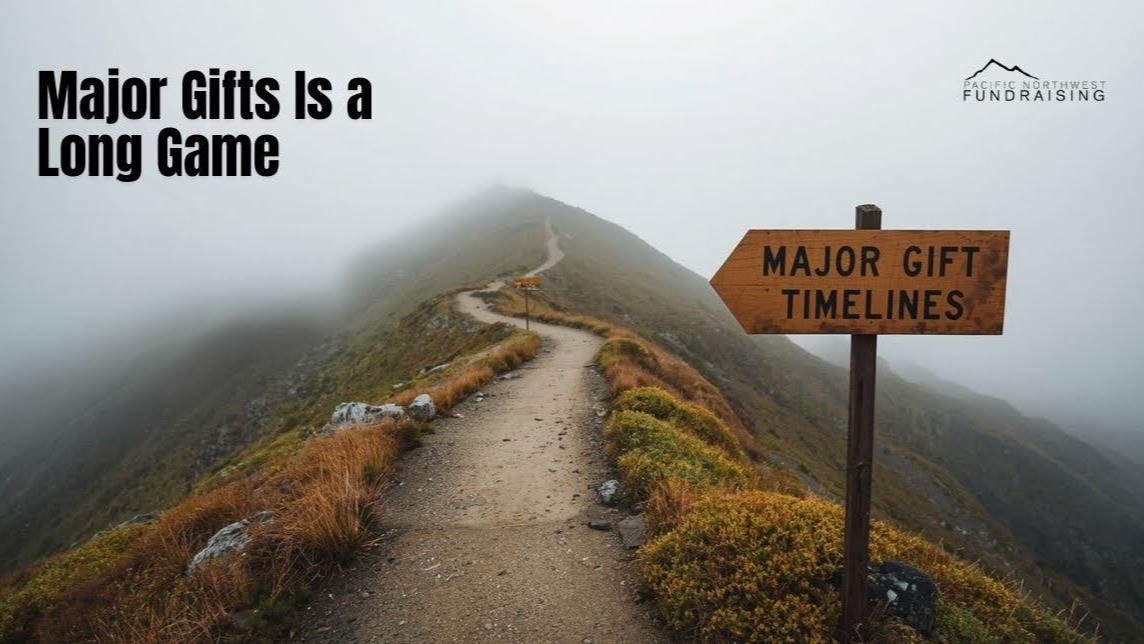
Major gifts are a 24–48-month process. Most organizations are hiring because they need results in 0–6 months.
That’s where things start to break.
The Reality of the Role
A typical major gifts position is expected to:
- Build and manage a portfolio of 150–200 donors
- Develop cultivation and solicitation strategies
- Strengthen donor relationships
- Increase revenue
All reasonable expectations.
But underneath that, there are often unspoken assumptions:
- The donor pipeline already exists
- The CRM is clean and usable
- Prospects are identified and qualified
- There’s a clear stewardship process
In many cases, those assumptions aren’t true.
What Actually Happens
Instead of stepping into a functioning system, the new hire walks into:
- incomplete or outdated data
- unclear donor segmentation
- limited prospect research
- inconsistent communication history
So now the job becomes two jobs:
- Build the system
- Raise the money
At the same time.
The Timeline Mismatch
Here’s where it gets critical:
- Major gifts require time, trust, and consistency
- Organizations often need immediate revenue
So the fundraiser is asked to:
- establish new relationships
- rebuild trust with existing donors
- AND produce near-term results
That’s not a performance issue.
That’s a structural issue.
The Turnover Cycle
When this happens, the pattern is predictable:
- Hire a fundraiser
- They try to build systems and raise money simultaneously
- Progress is slower than expected
- Pressure increases
- The role turns over in 12–16 months
- The organization starts the search again
And each time this happens, the cost compounds.
The True Cost (It’s Not Just Salary)
A fully loaded development hire can cost $120K–$130K+ per year.
But the real cost is much higher:
- Donor trust erodes with inconsistent relationships
- Stewardship breaks down
- Institutional knowledge is lost
- Staff and leadership absorb the stress
- The organization’s brand takes a hit
And perhaps most importantly:
The relationships belong to the person, not the organization
The Real Issue Isn’t the Person
Most fundraisers hired into these roles are capable.
Many are experienced. Many are skilled relationship builders.
But they’re being asked to succeed in an environment that hasn’t been fully built to support them.
The Sequence Is Backwards
What we often see is this:
Hire → hope → adjust → repeat
But effective development work follows a different sequence:
- Build the infrastructure
- Create the pipeline
- Establish the strategy
- Then hire the role
Setting People Up to Succeed
This isn’t about replacing development staff.
It’s about setting them up to succeed.
When the system exists:
- fundraisers can focus on relationships
- donor experiences are consistent
- leadership has visibility into progress
- revenue becomes more predictable
Development Is a Team Sport
No single person should be expected to:
- build the system
- manage the data
- create the strategy
- AND cultivate donors at scale
That’s not a job. That’s a department.
A Different Way to Think About It
If your organization is hiring for a major gifts role, it’s worth asking:
- Do we have a clear donor pipeline?
- Is our data reliable and actionable?
- Are our systems supporting relationship work—or slowing it down?
The success of that hire won’t just depend on who you bring in.
It will depend on what you’ve built around them.
Final Thought
Most major gifts roles don’t fail because of the fundraiser.
They fail because the system wasn’t ready for them to succeed.
And when we get the sequence right, everything changes.
If this resonates with what you’re seeing in your own organization, I’m always happy to compare notes.
You can schedule time here: https://meetings.hubspot.com/eddie94 or email me directly at [email protected]