
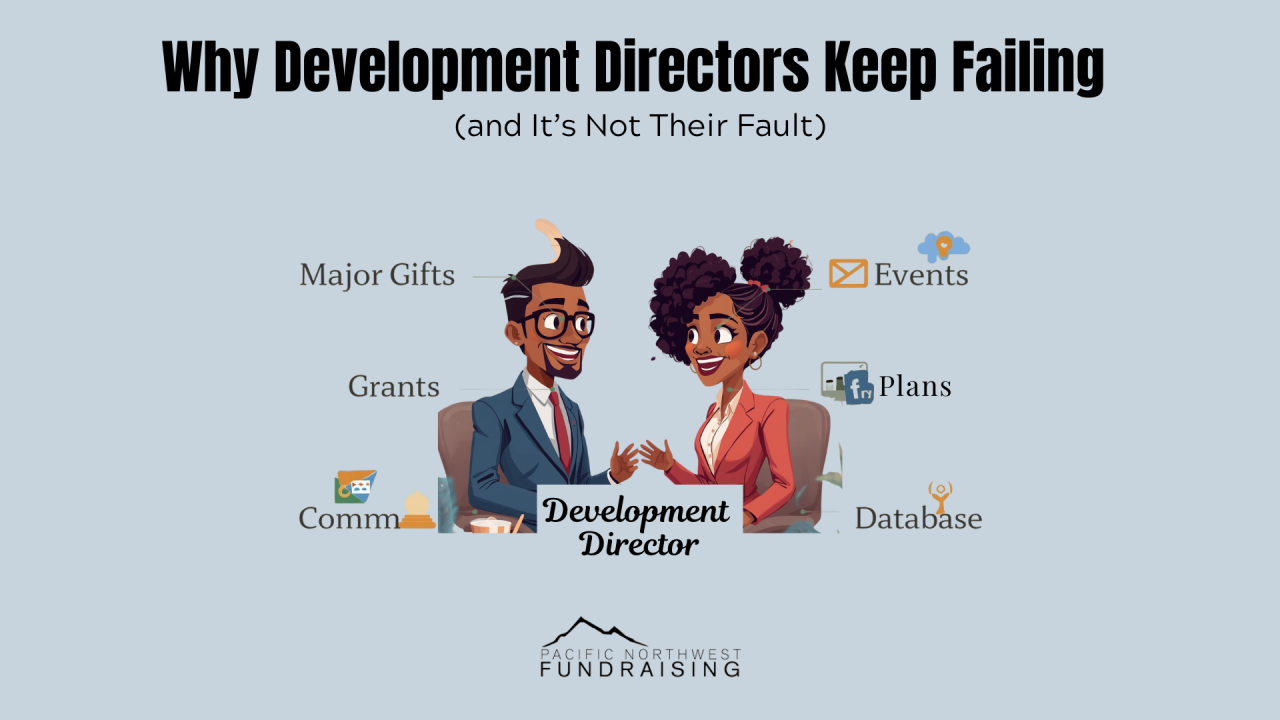
In more than 15 years of working in nonprofit fundraising, I’ve watched the same cycle repeat itself over and over again.
A nonprofit hires a Development Director. The role is huge. The expectations are vague. The pressure is immediate.
Sixteen months later, the Development Director is gone.
The organization is frustrated. The board is confused. Donors are unsettled. Staff are exhausted.
And then the cycle starts again.
Here’s the hard truth I’ve come to believe:
Most Development Directors don’t fail because they lack skill or commitment. They fail because they’re hired into broken systems.
The “Unicorn” Problem
Many nonprofits unintentionally create “unicorn” Development Director roles—jobs that expect one person to be:
- a major gifts officer
- an event producer
- a grant writer
- a communications director
- a social media manager
- a database administrator
- a board engagement strategist
All at once.
That’s not one job. That’s six.
When these roles fail, we often blame the person. But in reality, we’re asking an individual to compensate for missing systems.
The Real Cost of Getting This Wrong
A failed Development Director hire is expensive.
There’s the obvious cost—salary, benefits, and recruitment. But the hidden costs are often worse:
- disrupted donor relationships
- loss of trust and momentum
- brand inconsistency
- staff stress and burnout
- leadership distraction
Yet many organizations repeat the same hiring pattern without changing the conditions.
Development Is a System, Not a Person
Fundraising doesn’t succeed because someone works harder. It succeeds because the organization works differently.
Healthy development requires:
- clear roles and ownership
- repeatable fundraising infrastructure
- consistent stewardship
- realistic board expectations
- leadership time is protected for relationships
When these things aren’t in place, hiring a Development Director is premature. You’re asking a person to solve a systems problem.
Development Happens Over Time
This part matters more than most boards realize.
Development literally means “over time.”
Major gifts, donor trust, and board confidence compound over 18–36 months. When organizations delay investing in development capacity, they create artificial urgency later.
That urgency often turns into desperation fundraising.
And you can’t build strong donor relationships out of desperation.
Infrastructure and Major Gifts Are Two Different Jobs
One of the most common structural mistakes I see is combining fundraising infrastructure and major gifts into a single role.
These are different functions.
Infrastructure work includes:
- annual giving campaigns
- donor communications and stewardship systems
- database management and reporting
- sponsorship systems
- board ambassador tools
This work is repeatable and system-based.
Major gifts work is different:
- relationship management
- cultivation meetings
- asks and follow-up
- stewardship and upgrades
This is the work a Development Director should be doing.
When we separate these two functions, everything gets healthier.
The “Top 30” Insight
Here’s something many organizations don’t realize:
Until an organization reaches a certain level of complexity, it can successfully manage donor development internally by owning about 30 core donor relationships—if the systems are in place.
At this stage, what organizations need most isn’t a unicorn Development Director.
They need infrastructure, clarity, and discipline.
A Better Model
At Pacific Northwest Fundraising, we’ve built our work around a simple belief:
We don’t replace Development Directors. We build the systems that give them a fighting chance.
By running fundraising infrastructure fractionally—at a cost significantly lower than a full-time hire—organizations can:
- stop cycling through failed hires
- protect donor trust
- hire Development Directors into functioning systems
- allow DDs to focus on major gifts, where the real ROI lives
This model becomes a bridge: from instability to sustainability.
A Question for Boards and Leaders
Before hiring your next Development Director, ask:
Are we hiring a person—or are we avoiding a systems problem?
If the systems aren’t ready, no hire will fix it.
But if you build the infrastructure first, the right Development Director can thrive.
I recently put this thinking into a longer white paper because I kept seeing the same pattern play out. If this resonates with you, I’d love to hear what you’re seeing in your own organization.