There’s an old saying in nonprofit development: everyone gets a year.
It exists for a reason. Real development — the kind that builds trust, loyalty, and sustained giving — doesn’t happen on an event timeline. It happens over time. And yet, most boards evaluate development work as if it were event-based fundraising.
That mismatch is at the heart of why so many organizations feel stuck.
The Category Error That Trips Up Boards
In boardrooms across the sector, three very different concepts are routinely collapsed into one word:
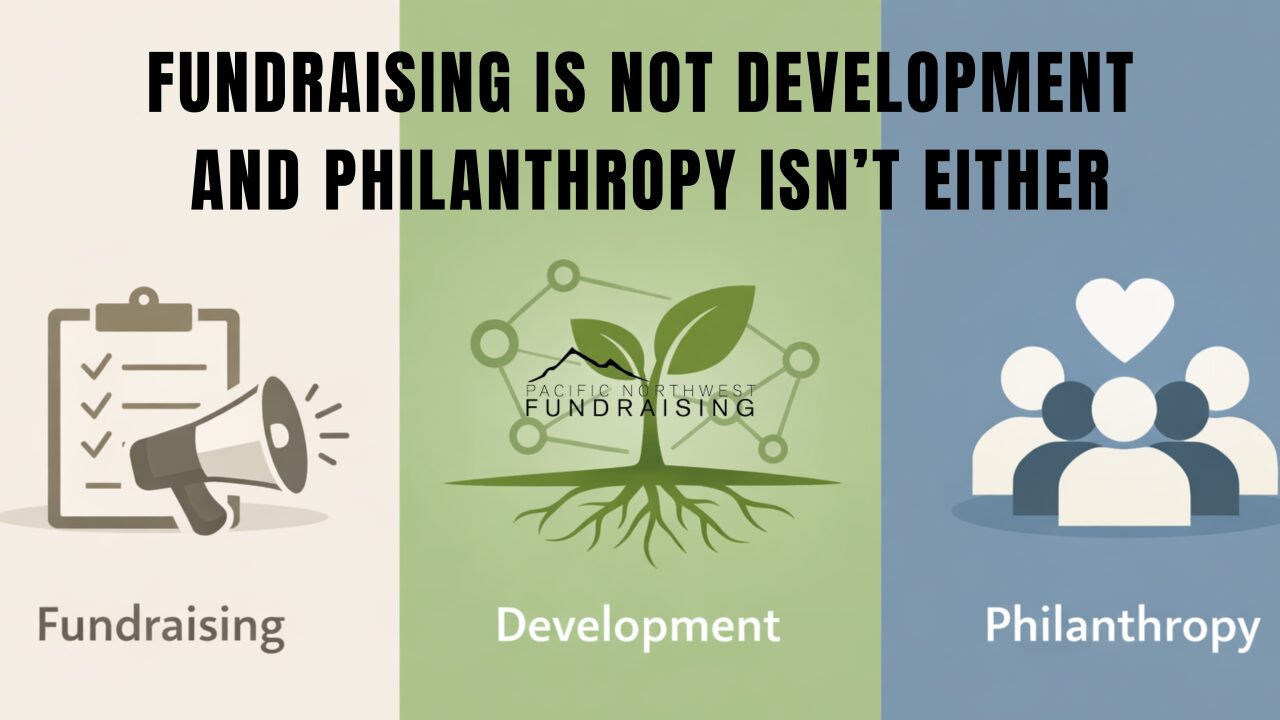
Fundraising. Development. Philanthropy.
They are not the same — and when they’re treated as interchangeable, organizations unintentionally sabotage their own growth.
Fundraising is transactional. It’s time-bound, event-driven, and focused on a specific ask.
Development is relational. It’s the system that nurtures trust through stewardship, consistency, communication, and follow-up over time.
Philanthropy is meaning-based. It’s why people care, why they stay, and why they deepen their commitment beyond a single gift.
In board education settings, I often see a moment of visible relief when these distinctions are named clearly. When people understand that an “ask” is only one moment in a much longer relationship, fear dissipates — and clarity takes its place.
Why “Everyone Gets a Year” Still Isn’t the Full Truth
The saying exists because development work follows a predictable arc:
Year One is about building the engine:
- Cleaning and activating the donor database
- Establishing acknowledgement and stewardship practices
- Creating a consistent communication cadence
- Educating leadership and boards
- Re-engaging existing supporters
Year Two is when results compound:
- Retention improves
- Monthly donors stabilize
- Campaigns perform better
- Major gifts begin to close
- Philanthropic relationships deepen
Expecting Year One to produce Year Two outcomes is one of the most common — and costly — mistakes boards make. Development, by definition, unfolds over time.
The Hidden Cost of the Traditional Model
When fundraising feels stalled, many organizations respond by hiring a full-time Development Director.
Fully loaded, that role often costs $120,000–$130,000 per year, including benefits. Nationally, those roles turn over in under 16 months when expectations are unrealistic and systems are underbuilt.
What’s lost in that churn isn’t just money. It’s relationships, trust, and continuity — the very things philanthropy depends on.
The Counterintuitive Math Boards Rarely See
Here’s the part that often reframes the conversation:
Two years of fractional, team-based development support can cost less than one year of a failed hire, while delivering systems, continuity, and board education along the way.
Time, not intensity, is the scarcest resource in development.
Continuity is where philanthropy takes root.
Events Raise Money. Philanthropy Sustains Organizations.
Events and campaigns matter. They create energy and urgency.
But they don’t create loyalty on their own.
That work happens in:
- Thoughtful stewardship
- Consistent communication
- Storytelling rooted in belief
- Invitations into purpose
- Trust built over time
In board trainings, I often remind people: an ask should never be a surprise. When donors understand the mission, see themselves in the story, and feel genuinely appreciated, giving becomes a natural next step, not a transactional moment.
What Boards Should Be Governing Instead
Strong boards don’t just ask, “How much did we raise?”
They ask:
- Are we building relationships or just transactions?
- Do we have systems that support retention?
- Are donors thanked well and consistently?
- Are we investing in philanthropy, not just events?
These are governance questions — not operational ones.
The Reframe That Changes Everything
Fundraising asks for money. Development builds relationships. Philanthropy invites shared purpose.
When organizations honor the differences — and the timelines — between the three, fundraising stops feeling frantic and starts becoming sustainable.
Development happens over time. Philanthropy happens through trust. And when boards understand both, the results follow.
Eddie Allen
Founder/CEO/Lead Guide
Pacific Northwest Fundraising
Pronouns: he/him/his
360.921.2908
www.pacificnorthwestfundraising.us
Connecting Mission with Passion
Schedule a meeting at: https://meetings.hubspot.com/eddie94